
Africa Talks is a monthly talk series purposefully launched by the African Studies Program at UW-Madison in collaboration with the African Center for Community Development, Inc to coincide with the 50th Anniversary of Africa at Noon. This year, we want to celebrate 50 years of sharing scholarships on campus by reminding our community that the work we do must extend beyond the walls of the university. Every last Wednesday from 5 p.m. to 6:30 p.m., advanced graduate student affiliates of the African Studies Program will present a one-hour talk to community members in Madison and its environs.
Media Spotlight on Capital City Hues.
Find a Past Lineup
Fall 2026 – Spring 2027 Line-Up
(We are currently updating this page. Please check back for the complete details.)
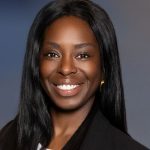 Moderator: Erica Ayisi
September 30
Talk Title: We No Go Gree: Youth, Protest, and the Politics of Care in Nigeria
Talk Description: What does it mean when young people take to the streets to say, “We no go gree”—we will not accept this? In recent years, Nigerian youth have mobilized through protests, chants, digital platforms, dance, visual culture, and other forms of collective expression to confront economic hardship, political exclusion, and uncertain futures. While protest is often understood as a demand directed at the state, this talk asks what else happens when people gather to resist conditions of precarity.
Drawing on fieldwork and visual analysis of recent Nigerian youth protests, this talk examines protest as both a political struggle and a practice of collective care. I argue that young people do not simply protest against what they reject; through their mobilization, they also create networks of recognition, solidarity, mutual support, and collective endurance. I place these practices in conversation with the Yoruba concept of Ìtọ́jú, a form of care concerned with attending to, nurturing, and sustaining life and relationships.
At the same time, I do not treat protest as inherently emancipatory. Protest can challenge existing hierarchies while also producing new political ambitions and elites. Its politics is therefore ambivalent: it can make marginalized suffering visible and sustain collective life, even as it can become a site of contestation over power. By examining the chants, images, bodies, and networks through which Nigerian youth mobilize, this talk argues that protest is not only a demand for political change. It is also a struggle over who is recognized, whose lives are valued, and how collective life might be sustained when formal political institutions fail to care.
Speaker: Kehinde Samuel Olukayode

Kehinde is a fourth-year doctoral student in Interdisciplinary Theatre Studies program at the Department of English, with a minor in Visual Culture Studies. His research explores African performance, Black theatre, youth politics, protest, and the ways people use theatre, dance, digital media, and other forms of cultural expression to respond to political and social challenges. His current work focuses on how Nigerian youth navigate precarity, organize collectively, and imagine new forms of political and social life.
Community Panelist: Milcah Rimmer

Milcah Rimmer is a community organizer and youth worker committed to supporting Black youth across the diaspora. As Youth Justice Manager at Freedom, Inc., they work alongside Black and Southeast Asian youth and families through advocacy on domestic and sexual violence, leadership development, political education, and community organizing. Their work centers building the power of Black, queer, trans, and gender-expansive communities to end personal and state violence and build a future where all people can be safe, supported, and free.
October 28
Talk Title: Embodied Archives and Community Performance: Tess Onwueme’s Theatre in Nigeria
Talk Description: This presentation explores how Nigerian playwright Tess Onwueme and theatre practitioner Daniel Steve use theatre to bring communities together, preserve collective memories, and inspire social and political change. It focuses on how local women and young people draw on their own experiences, memories of the past, and ritual practices to create performances that reflect their histories and strengthen their roles as agents of change.
Speaker: Lin Wu

Lin Wu, also known by her Hausa name, Samira, completed her Bachelor’s degree in Hausa Language and Literature at Beijing Foreign Studies University. During her undergraduate studies, she participated in an exchange program at Bayero University, Kano, where she studied Hausa for four months. This experience, together with her deep enthusiasm for Nigerian culture, inspired her to pursue a master’s degree in African Literature and Culture at Peking University. She is currently a second-year PhD student in the Department of African Cultural Studies. Her current research focuses on Nigerian female playwrights, particularly Dr. Tess Onwueme. She also hopes to expand her research to include Hausa theatre troupes in Northern Nigeria and to conduct fieldwork there to further enrich her research materials.
Community Panelist: Ama Ptak

Originally from Ghana, Ama holds two Masters degrees, from the University of Cape Coast and UW-Madison. With a background in sociolinguistics, Ama has a lot of experience navigating different socio-cultural contexts and is a strong advocate of language preservation. To her, language, in whatever form, is a capital gain. At the African Center, Ama previously served as the community outreach coordinator, developing programs and implementing community engagement initiatives. As Executive Director, Ama builds strategic partnerships and coordinates with the board and community to ensure the Center is the pivotal resource our community needs. Ama loves spending time with her family, listening to community members, and participating in community events and research.
January 27
Talk Title: Automatic Grade Progression, Educational Attainment, and Child Labor in Zambia
Talk Description: I examine the impact of the automatic grade progression policy implemented by the Zambian government from 2013 to 2022 on educational attainment and child labor among school-going-age individuals affected by this policy. I use the annual 2012 to 2022 Labor Force Participation Surveys compiled by the Zambia Statistics Office (Zamstats), and school-level scores on the national grade 7 examinations to assign treatment and control groups based on district-level failure rates. An individual of grade 7 school-going age residing in a district with a high level of failure rate (above 50% of total is assigned as being treated, and individuals with similar characteristics (as the treated cohort) living in districts with low failure rates serve as controls. I use a difference-in-difference framework, with 2018, the year in which the policy was emphasized (took effect), as the cutoff for a pre and post-automatic grade progression. The outcomes of interest are the years of schooling and the number of hours spent working for money for children under the age of 18.
Speaker: Theresa Ng’andu
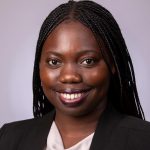
Theresa fifth year Ph.D. candidate in the Department of Agricultural and Applied Economics. Her field is development economics, with a focus on environmental and health economics, and the economics of education. She will be on the job market for the 2026 – 2027 academic year. In her free time, she likes to avoid her research problems by running, taking walks, reading fiction (mostly novels), and attending live concerts.
Community Panelist: Ama Ptak
Originally from Ghana, Ama holds two Masters degrees, from the University of Cape Coast and UW-Madison. With a background in sociolinguistics, Ama has a lot of experience navigating different socio-cultural contexts and is a strong advocate of language preservation. To her, language, in whatever form, is a capital gain. At the African Center, Ama previously served as the community outreach coordinator, developing programs and implementing community engagement initiatives. As Executive Director, Ama builds strategic partnerships and coordinates with the board and community to ensure the Center is the pivotal resource our community needs. Ama loves spending time with her family, listening to community members, and participating in community events and research.
February 24
Talk Title: Who Cares for Malawi? Rethinking Democracy and Intergenerational Learning in a Time of Polycrisis
Talk Description: This pilot study explores how Malawians across generations understand democratic governance amid polycrisis. Drawing on qualitative interviews and focus group discussions conducted during the 2025 general election campaign period in Malawi (Machinga and Lilongwe), the study reveals that participants understood democracy not only through elections, political freedoms, and participation, but also through the everyday ability of the state to support livelihoods, food security, employment, and basic services. Importantly, almost all participants agreed that life in the contemporary Malawi is hard even after several years of successful multiparty. However, people’s expectations from the state in mitigating these hardships differed across generations. Older participants often interpreted contemporary hardships through memories of Malawi’s one-party era, recalling a state associated with food security, agricultural support, and a stronger sense of state presence. Younger participants, who had little or no direct experience of that period, made meaning of a democratic state through present-day experiences of unemployment, economic insecurity, limited opportunities, and uncertain futures. These differences suggest that Malawians do not share a singular experience of democratic governance. Instead, understandings of the state are shaped by the historical experiences available to different generations and by how contemporary crises are lived. The study highlights the importance of taking intergenerational learning seriously when examining governance in Malawi
Speaker: Isaac Phiri
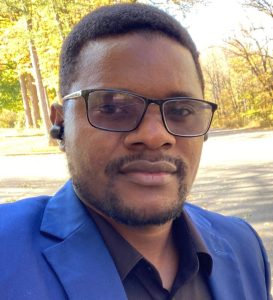
Isaac Kamera Phiri is a third-year doctoral student in Educational Policy Studies at the University of Wisconsin–Madison, with distributed minors in Global Health and Political Science. A native of Mzimba in Malawi, his research explores education, governance, development, indigenous knowledge, and the ways Malawian communities make sense of social and political change. His work pays particular attention to how everyday experiences, memory, and local knowledge shape understandings of governance and development in Malawi.
Community Panelist: Ama Ptak
Originally from Ghana, Ama holds two Masters degrees, from the University of Cape Coast and UW-Madison. With a background in sociolinguistics, Ama has a lot of experience navigating different socio-cultural contexts and is a strong advocate of language preservation. To her, language, in whatever form, is a capital gain. At the African Center, Ama previously served as the community outreach coordinator, developing programs and implementing community engagement initiatives. As Executive Director, Ama builds strategic partnerships and coordinates with the board and community to ensure the Center is the pivotal resource our community needs. Ama loves spending time with her family, listening to community members, and participating in community events and research.
March 31
Talk Title: Narratives of Chinese Ancestry on Kenya’s Northern Coast: Memory, Identity, and Belonging
Talk Description: What can family stories tell us about who we are and where we belong? In the United States, genealogy and DNA ancestry testing have sparked conversations about heritage and identity. This talk approaches related questions through narratives of Chinese ancestry in Siyu, a town on Kenya’s northern coast. Drawing on oral histories and conversations with residents, I explore how stories of shipwrecks, settlement, and family origins are passed down, questioned, and given new meanings across generations. These narratives open a window onto the coast’s longstanding connections across the Indian Ocean. They also invite the audience to consider a question that transcends borders: how do the stories we inherit and the stories others tell about us shape our sense of belonging?
Speaker: Rachel Maina
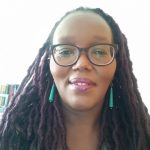
Rachel Maina is a PhD candidate in African Cultural Studies at the University of Wisconsin–Madison, with a doctoral minor in Anthropology. Her research examines how residents of Siyu on Kenya’s northern coast remember and interpret narratives of Chinese ancestry, and what these stories reveal about identity, belonging, and connections across the Indian Ocean. She holds master’s degrees in African Languages and Literature and in Swahili Studies, and has taught African languages, literature, and cultures at higher education institutions in Kenya and the United States. Her additional research interests include language pedagogy and the use of digital technologies and diverse forms of communication to support African language learning. Rachel is also a creative writer whose Swahili short stories have been selected for use in Kenyan school examinations. Across her research, teaching, and creative work, she maintains a sustained interest in storytelling, cultural expression, and how people learn and communicate.
Community Panelist: Ama Ptak
Originally from Ghana, Ama holds two Masters degrees, from the University of Cape Coast and UW-Madison. With a background in sociolinguistics, Ama has a lot of experience navigating different socio-cultural contexts and is a strong advocate of language preservation. To her, language, in whatever form, is a capital gain. At the African Center, Ama previously served as the community outreach coordinator, developing programs and implementing community engagement initiatives. As Executive Director, Ama builds strategic partnerships and coordinates with the board and community to ensure the Center is the pivotal resource our community needs. Ama loves spending time with her family, listening to community members, and participating in community events and research.
April 8
Talk Title: Trading for Peace: Market Women and Activism during Liberia’s Civil Wars
Talk Description: coming soon
Speaker: Diamond Urey

Diamond Urey is a PhD student in African Cultural Studies at UW-Madison. Her research examines the historical role of African market women as central political actors in moments of protest and social transformation. Specifically, her work centers on women’s grassroots organizing in Liberia’s civil wars. Her research interests include African women/gender history, political history, and civil conflicts in military history.
Community Panelist: Ama Ptak
Originally from Ghana, Ama holds two Masters degrees, from the University of Cape Coast and UW-Madison. With a background in sociolinguistics, Ama has a lot of experience navigating different socio-cultural contexts and is a strong advocate of language preservation. To her, language, in whatever form, is a capital gain. At the African Center, Ama previously served as the community outreach coordinator, developing programs and implementing community engagement initiatives. As Executive Director, Ama builds strategic partnerships and coordinates with the board and community to ensure the Center is the pivotal resource our community needs. Ama loves spending time with her family, listening to community members, and participating in community events and research.