Conference Abstract
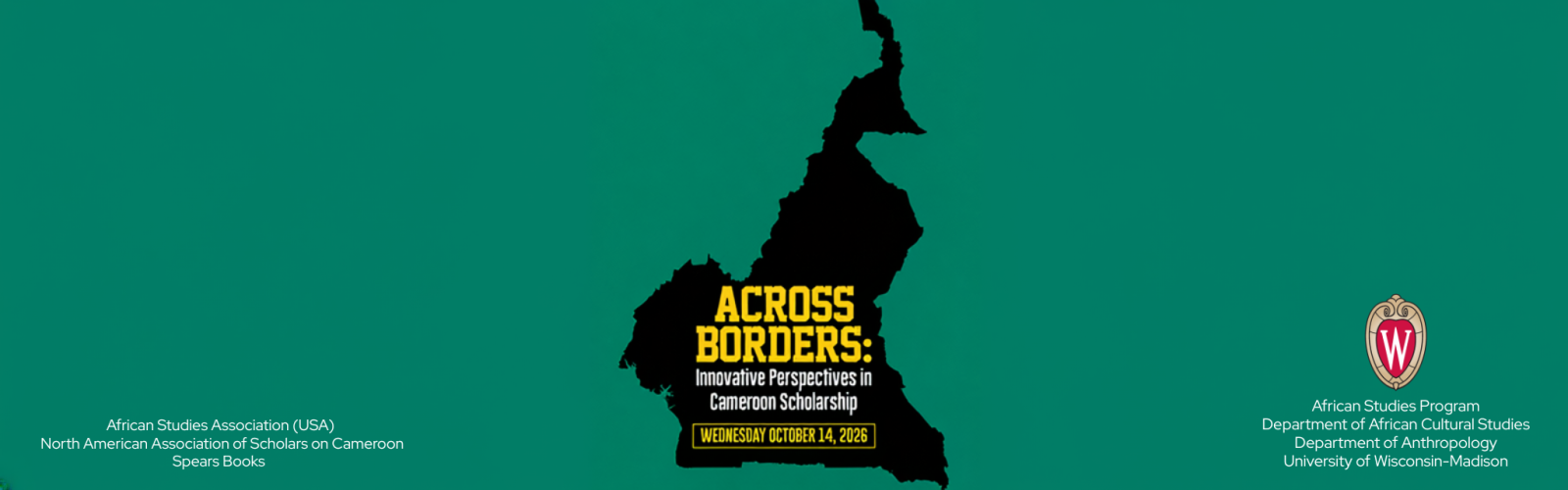
This virtual conference is inspired by the recently retired Professor Pamela Feldman-Savelsberg’s long-running work in anthropology, focusing on gender and reproductive health in Cameroon. Building on her scholarship, the panelists of this mini conference explore new dynamics in Cameroon studies, spanning anthropology and history, and examining gender, photography, and health.
That the conference is taking place at UW-Madison is significant, as the university has long supported robust Cameroon studies, spanning scholars and students who have focused on the subject—such as Michael Schatzberg and Aili Tripp—and prominent alumni such as Meredith Terretta. The conference, then, continues to highlight this strength in African studies, specifically Cameroon studies, offering innovative perspectives in Cameroon scholarship.
Date: Wednesday October 14, 2026
Venue: The event is virtual: Join Zoom Here
KEYNOTE PRESENTER
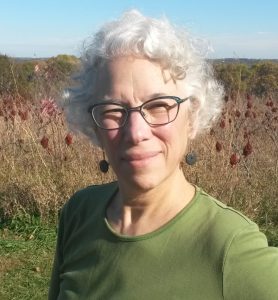
Dr. Pamela Feldman-Savelsberg,
Professor Emerita of Sociology and Anthropology, Carleton College
Title: Au Cameroun, berceau de nos ancêtres: Motherhood, Politics and History
Abstract: Using the opening lines of the Cameroonian national anthem, “cradle of our ancestors,” this contribution explores how the study of motherhood and mothering can be considered simultaneously as a root motivator toward key political and historical events in Cameroon, and as an under-explored frontier in both Cameroonian Studies and in African Studies more broadly.
Biography: Pamela Feldman-Savelsberg is the Broom Professor of Social Demography and Anthropology in the Department of Sociology and Anthropology at Carleton College (Emeritus), member of the North American Association of Cameroon Scholars and the Arbeitskreis Medical Anthropology at the Freie Universität Berlin, and a former Research Partner of the Otto–Hahn Research Group “Gender, Migration and Social Mobility” at the Max Planck Institute for Social Anthropology. She is the author of Plundered Kitchens, Empty Wombs: Threatened Reproduction and Identity in the Cameroon Grassfields and Mothers on the Move: Reproducing Belonging between Africa and Europe.
More information here.
DISCUSSANTS
- Mark D. Delancey, Professor of History of Art and Architecture, DePaul University. More information here.
- Julius Amin, Professor of History, University of Dayton. More information here.
- Harmony O’Rourke, Professor of History, Associate Dean for Student and Faculty Development, Pitzer College. More information here.
- Claire Wendland, Professor of Anthropology, UW-Madison. More information here.
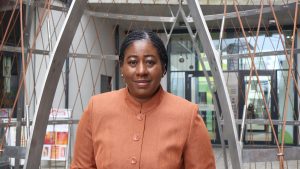
Elizabeth Beloe
Social and Cultural Anthropologist, Expert Group of the European Commission (Germany)
Title: Cameroonian Women in Hometown Associations in Berlin
Abstract: Hometown associations play an important role in the lives of Cameroonian migrants in Berlin by bringing together people with shared connections to towns, villages, and regions in Cameroon. Beyond maintaining cultural ties, these associations provide spaces for belonging, mutual support, and connections between Berlin and communities of origin. This presentation focuses on women’s participation in these associations and the different roles they play in sustaining community life. Women organize social and cultural activities, provide emotional and practical support, mobilize resources, and contribute to transnational initiatives and community projects in Cameroon. Their participation also provides insights into gender roles, leadership, and decision-making within migrant communities.
By focusing on women’s experiences, the presentation explores how gender, migration, community, and transnational connections intersect, highlighting hometown associations as important spaces where Cameroonian women build solidarity, negotiate belonging and identity, and maintain relationships across borders.
Biography: Dr. Elizabeth Beloe is a social and cultural anthropologist and Chairperson of the Federal Association of Networks of Migrant Organizations (BV NeMO e.V.). Her work focuses on migration, asylum, diversity, participation, and conflict management. She is committed to promoting a diverse, fair, and inclusive society and to strengthening the role of migrant organizations in Germany.
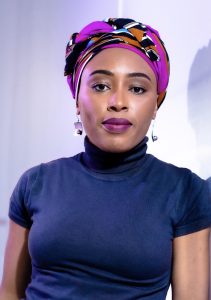
Rose Ndengue
Associate Professor of History, York University, Glendon (Canada)
Title: Intersectional and decolonial feminist discourse and praxis in Cameroonian women’s nationalism in the 1950s.
Abstract: This presentation is an invitation to enrich the production of knowledge on Cameroon/African studies and Black feminisms by documenting the mobilizations of the Cameroonian nationalist activists of the Democratic Union of Cameroonian Women (UDEFEC) during the 1950s. I will explore the contributions of its militants to the framework of emancipation as a political thought as well as a praxis. To this end, I will consider the emancipatory speeches and practices they’ve elaborated to dismantle the coloniality of gender and envision and alternative order based on popular democracy.
Biography: Cameroonian scholar-activist, Rose Ndengue is a historian socio-politician who defines herself as a black feminist from the transatlantic space, straddling Africa, Europe and the Americas. She is currently associate Professor in the Department of Global and Social Studies at Glendon, York University, where she is developing a teaching program in African Studies and black feminisms from postcolonial and decolonial standpoints. Her research focuses on gender and politics in Africa and the black diasporas, in colonial and postcolonial contexts, with a particular emphasis on African and Afrodescendant women’s mobilizations in Cameroonian and French contexts.
Her work disseminated in academic journals, the media and blogs, contributes to the mainstreaming of Black Feminist Studies, from a pluridisciplinary and transnational perspective. As an activist, Rose has co-founded afrofeminists and African feminists organizations, bridging black feminists from diaspora and African feminists in Africa: like Sawtche afrofeminist collective, Coordination feministe Camerounaise, Collectif 1931, Femmes Actantes & Jabanè.
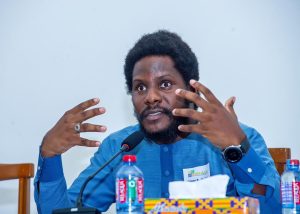
Kevin Baskouda
Assistant Professor of History, University of Maroua (Cameroon)
Title: I’m Angry Because I Don’t have a Husband”: Popular Songs by Women in Northern Cameroon
Abstract: This paper focuses on the study of song as a popular mode of political action in northern Cameroon during the 1990s. Women in the mountainous town of Tokombéré have developed an ambivalent discourse towards multipartyism, provoked by the political changes of the early 1990s. This paper draws from archival material and ethnographic data collected during oral interviews. I adopt a multidisciplinary approach—history, anthropology, and gender studies—to examine two phenomena. First, I scrutinize the historicity of song as a means of free expression for women in marital relations. Second, I examine popular songs from the early 1990s to determine how they are situated between procedures of affection and registration of indignation towards the dominant male-led political parties, the Cameroon People’s Democratic Movement, and the National Union for Democracy and Progress. For example, the songs cast the president as the “nation’s husband” and frame the political process as a means of seeking a “good marriage” between a leader and the people.
Biography: Kevin Baskouda is an Assistant Professor of African Political History in the Department of History, Higher Teachers’ Training College, University of Maroua – Cameroon. His research concerns the politology of subalterns, catholic educational institutions and toponymic inscriptions in Northern Cameroon. His works have appeared in major journals including Journal of Asian and African Studies, Canadian Journal of African Studies, Africa Spectrum, Journal of African Cultural Studies and Exchange.
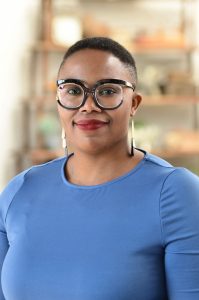
Monique Kwachou
Writer, Youth Worker, and Scholar of Gender Studies and Education for Development (Cameroon)
Title: Charting Waves of Cameroonian Feminisms
Abstract: Feminist resistance in Africa is often misrepresented as either a Western import or a recent phenomenon, largely due to the lack of documented histories of popular struggles against sexism. Formal feminist studies reinforce this misconception by relying on Western frameworks, such as the ‘waves’ metaphor, to periodize feminist movements. While this metaphor has been critiqued, it remains a useful tool for mapping shifts in feminist expression. This paper applies the ‘waves’ framework to Cameroon, categorizing feminist sentiments and activism across five distinct historical phases before, during, and after Western imperialism. By documenting these waves, we challenge the notion that feminism is foreign to Africa and demonstrate that Cameroonian women have consistently resisted sexism in evolving forms. This study contributes to decolonizing feminist scholarship by asserting that African feminism has always existed, adapting to sociopolitical contexts while shaping and being shaped by global feminist currents.
Biography: Monique Kwachou is a Cameroonian writer, youth worker, and scholar of gender studies and education for development. She holds a dual honors BSc. in Gender Studies and Sociology from the University of Buea, an M.A in Education, Gender and International Development from UCL Institute of Education, London, and a PhD in Development Studies from the University of the Free State, South Africa. Monique moves between the roles of creative, academic, development practitioner, and activist, yet her work (research and practice) generally centers on the theory and application of African-feminist thought, education to address social injustices, and sustainable development.
Alma J Gottlieb
Professor Emerita of Anthropology, African Studies, and Gender and Women’s Studies, University of Illinois at Urbana-Champaign (USA)
Title: Globalizing Cameroon: Thoughts from a Non-Cameroonianist
Abstract: Pamela Feldman-Savelsberg knows a great deal about Cameroon. She also knows a great deal about many other places in the world. Ever since the earliest moments of her publishing career, the genius of her work has been to simultaneously zoom in and out of Cameroon. By that, I mean zoom in and out not only geographically and physically, but also intellectually and theoretically. Pamela’s world travels and multilingual skills have given her at once the sorts of narrow and broad perspectives that the best ethnographers crave. In this talk, I will offer an appreciation of Pamela’s deep fieldwork engagements and published oeuvre as I admire them from the perspective of someone who has never set foot in Cameroon — but someone who has come to know much about both the country and its diaspora from Pamela’s rich writings.
Biography: Alma Gottlieb is a cultural anthropologist. Among other works, she is the author of A World of Babies: Imagined Guides for Eight Societies (2016), The Afterlife Is Where We Come from: The Culture of Infancy in West Africa (2004), and Under the Kapok Tree: Identity and Difference in Beng Thought (1992). From 1983-2016, Gottlieb taught anthropology, women’s studies, and African studies at the University of Illinois at Urbana-Champaign, where she is now Professor Emerita; she has also been a visiting professor and researcher at Princeton University, Brown University, the Catholic University of Leuven (Belgium), the École des Hautes Études en Sciences Sociales (Paris), the Instituto Superior de Ciências Sociais e Políticas (Lisbon), the National University of Côte d’Ivoire (Abidjan), Lewis and Clark College (Portland), and elsewhere. A past president of the Society for Humanistic Anthropology, she has received funding for her research from the Guggenheim Foundation, the National Endowment for the Humanities, the Social Science Research Council, the Wenner-Gren Foundation, and other agencies.
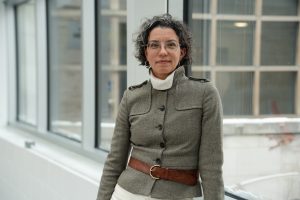
Meredith Terretta
Professor of History, University of Ottawa (Canada)
Title: Comrade Eduardo, Revolutionary Border Crossing, and Life Story as Decolonization History
Abstract: Job Ngoule Njapa, aka Eduardo Castillo, was born in Cameroon under French administration in 1945, joined a revolutionary nationalist movement as a boy in 1955, and went into exile in 1959 to train as a liberationist freedom fighter in independent Ghana, Algeria, and Congo-Brazzaville. There, he served in the Second Front contingent of the Kamerunian National Liberation Army (ALNK) fighting the independent Cameroonian regime that revolutionaries viewed as neocolonial. The story of Comrade Eduardo offers a new vantage point for understanding the 1960s shift from an imperial world order to an international order of unequally sovereign states and challenges the authority of the colonial archive. Njapa’s revolutionary border crossing reframes structural and geopolitical processes of African decolonization.
Biography: Meredith Terretta is professor of history at the University of Ottawa where she teaches courses and directs student research in African and legal and human rights history. She directs Frontiers of Belonging: Refuge Seeking and Hospitality in West and Central Africa, an International Research and Doctoral Training Group in partnership with universities in Ghana and Cameroon. She is also working on a SSHRC-funded research project (2016-2020) entitled Between the Bench, the Bar, and the Academy: The Socio-Historical Construction of Law in Africa from the Imperial to the Global Age.
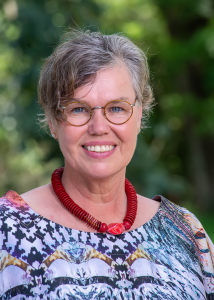
Erdmute Alber
Professor of Social Anthropology, University of Bayreuth (Germany)
Title: Caring for the future of one’s children: Changing widowhood in Northern Benin
Abstract: Pamela Feldmann-Savelsberg’s work has consistently focused on changing notions, narrations, and practices of motherhood. My paper relates to that scholarship by examining widows in northern Benin. Previously free to leave or to remarry, they recently started to remain in their deceased husbands’ compounds to secure, as they argue, their children’s futures. My paper traces these decisions by arguing that changing patterns of land ownership and the profound process of land privatization are the main reasons for this shift. It highlights that these transformations are connected to big changes in mothers’ subjectivities regarding their biological children, whom they now claim for themselves, and allows us to speak about their individual children’s futures.
Biography: Erdmute Alber is a German ethnologist whose research focuses on political and kinship anthropology. Since 2010, she has held the chair in Social Anthropology at the University of Bayreuth. Alber carried out her first field research in Peru in 1988 and 1989. Since 1991, she has followed this with regular research stays in Benin and Togo (since 2006). Since 2013, she has also been involved in the sub-project “African Middle Classes on the Move” at the Bayreuth Academy of Advanced African Studies with field research in Kenya. She has authored numerous books, including Transfers of Belonging. A Social History of Child Fostering in West Africa (2018)
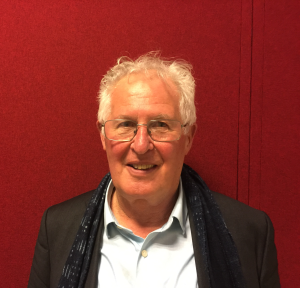
Peter Geschiere
Professor Emeritus of the Anthropology of Africa, University of Amsterdam / Leiden University (the Netherlands)
Title: Pamela Feldman-Savelsberg: Between the Intimate and the Global
Abstract: In my presentation, I hope to address Pamela’s striking talent of moving to and fro between the intimate and the global. For me, a somewhat unsettling discovery in my work on “witchcraft” and politics was how easily what people call “the witchcraft of the house” can become global. Pamela shows the same in a different field: motherhood belongs, in many respects, to the intimate sphere of life, but in her earlier studies of Bangangté motherhood, she showed how, even locally, this intimacy is deeply shaped by global changes. In her later work, the intimate becomes a challenging entry point for understanding how women live the global. How do such unexpected articulations of the intimate and the global relate to Francis Nyamnjoh’s emphasis on the person as “incomplete”?
Biography: Peter Lein Geschiere is a Dutch anthropologist, Africanist, and Emeritus Professor of Anthropology at the University of Amsterdam and Leiden University. Geschiere conducted fieldwork in Tunisia, the DRC, French- and English-speaking Cameroon, and Senegal (1968-2001). Geschiere specialized in Cameroon and the comparative study of processes of change in Africa. In 2002 he won the Distinguished Africanist Award from the US-based African Studies Association. Geschiere has published many scholarly books, including Village Communities and the State, Changing Relations among the Maka of Southeastern Cameroun since the Colonial Conquest (1982), The Modernity of Witchcraft (1997), The Perils of Belonging: Autochthony, Citizenship and Exclusion in Africa and Europe (2009), and Witchcraft, Intimacy and Trust – Africa in Comparison (2013).

Elizabeth Durham
Assistant Professor of Anthropology, Carleton College (USA)
Title: “A Revolution That We’ll Make Together Here”: Rethinking Medical Resistance in Cameroon
Abstract: Pamela Feldman-Savelsberg’s study of vaccine resistance is a masterstroke in showing how public health rhetoric around “misinformation” conceals minoritized histories; and how medical technology shapes and is shaped by politics. In this talk, I trace the influence of this study in my own work on psychopharmaceuticals. Unlike Feldman-Savelsberg’s interlocutors, many psychiatric patients embraced this medication. But closer ethnographic attention reveals another form of resistance at play—not the spectacular resistance of schoolgirls jumping from windows, or of burning villages, but of the quotidian use of psychopharmaceuticals to “be at ease,” against state psychiatry’s expectations of “good citizens.”
Biography: Elizabeth Durham is a medical and political anthropologist. Her research interests include health justice (secular and religious), Global Mental Health, the politics of responsibility and of time, and the ethics of social science research and collaboration in clinical and humanitarian settings, with a particular focus on public psychiatry in the Republic of Cameroon. Durham earned her PhD in anthropology from Princeton in May 2022. At Carleton, Durham is an assistant professor of anthropology.

Bridget A Teboh
Professor of History, University of Massachusetts Dartmouth (USA)
Title: African Women, Reproduction, and Belonging Across Borders: The Interdisciplinary Scholarship of Pamela Feldman-Savelsberg
Abstract: Professor Pamela Feldman-Savelsberg’s scholarship offers an important model of intellectual work conducted across disciplinary, geographic, cultural, and epistemological borders. As the Broom Professor of Social Demography and Anthropology at Carleton College, she developed a distinguished body of research at the intersections of social anthropology, African studies, gender studies, medical anthropology, migration, law, reproduction, identity, and belonging. I argue that her work demonstrates how scholarship grounded in Cameroon can illuminate broader questions concerning women’s lives, reproductive health, cultural memory, transnational migration, legal consciousness, and the formation of social identities.
The concept of “Across Borders” is especially appropriate for understanding Feldman-Savelsberg’s scholarly contribution. Her research moves beyond conventional disciplinary divisions by bringing together anthropology, demography, history, public health, gender studies, migration studies, and legal anthropology. It also crosses geographic boundaries by connecting communities in Cameroon with African diasporic experiences in Europe, particularly through her research on Cameroonian migrant mothers in Germany. Her work reveals that borders do not merely separate places and populations; they also create spaces of interaction in which identities, institutions, memories, family relationships, and systems of knowledge are negotiated and transformed. Two of her works and my favorites, Plundered Kitchens, Empty Wombs (1999), and Mothers on the Move (2016) reveal a remarkable intellectual continuity.
Biography: Bridget A. Teboh is Professor of History at the University of Massachusetts-Dartmouth, USA, where she has worked since 2005. She is also an affiliate faculty of the Women’s and Gender Studies Program, and Black Studies. Prof. Teboh specializes in African History, African American Women’s History, Women’s and Gender studies, and oral history. Her research interests are colonialism, post-coloniality, historical biography, women’s power [ikah-meyi], Politics, historical ethnography, Migration, and African Diaspora. She has won prestigious awards including Ford Foundation, ISOP, and is a three-time Carnegie ADFP award winner. She is Co-Editor: Berghahn Books, Ltd., Oxford, UK, Cameroon Studies Series; Board Member, Pan African University Press (PAUP); and since 2020, a Member of the Editorial Advisory Committee of Spears Books’ new series, Spears Studies in African and African Diaspora History.
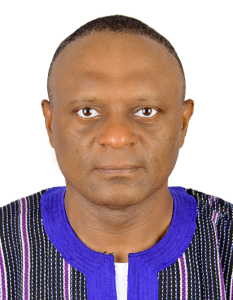
Flavien Ndonko
Independent Anthropologist (Togo)
Title: Genealogies of Vaccine Rumor: From the Sterilization Scare of 1990 to COVID-19 in Cameroon
Abstract: In 1990, a rumor that public health workers were secretly sterilizing girls and women swept through Cameroon, halting a national immunization campaign. Thirty years later, rumors about COVID-19 vaccines followed strikingly similar patterns of distrust, memory, and resistance. Drawing on collaborative research with Pamela Feldman-Savelsberg spanning three decades, including our 2000 study of the sterilization scare, this talk traces the genealogy of vaccine rumor in Cameroon. It asks what these two moments, separated by a generation, reveal about the durability of medical mistrust and the social work that rumor performs in moments of biomedical uncertainty.
Biography: Flavien Tiokou Ndonko is a Cameroonian anthropologist, researcher, and public health specialist known for his work on cultural anthropology, health programs, and social research in Cameroon. He has written on the social context of traditions like breast ironing and urban-rural migration in Cameroon, as well as the anthropological examination of body waste and cultural representations among coastal and savannah populations
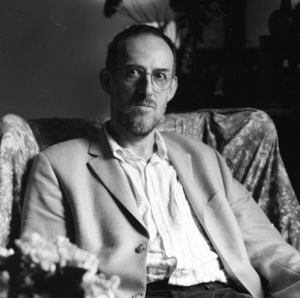
David Zeitlyn
Professor of Social Anthropology, University of Oxford (UK)
Title: On Fieldwork, Close Reading and the Limits of Photographic History Research
Abstract: My question is how far can ethnographically informed close reading of photographs can take us? Egerton’s photos contrast with Jacques Toussele’s but in many cases there is next to no contextual information apart from what can be gleaned from the surviving images. We are left with questions such as: What should we do in the absence of further information? Should we consign images to silence. Are there different forms of silence? Different paths of consignment?
Biography: David Zeitlyn is a British anthropologist. He is Professor of Social Anthropology at the University of Oxford and a supernumerary Fellow of Wolfson College, Oxford. His research has focused on the Mambila people of Cameroon, endangered languages, and Cameroonian photographers such as Samuel Finlak, Joseph Chila, and the late Jacques Toussele. His work with anthropological archives has led him to write on the ethics of archiving fieldwork data, and he has helped revise the Association of Social Anthropologists ethical guidelines for anthropology. He has worked extensively on divination, especially the form known as spider divination or nggam.
All times are in the Central Standard Time zone. See time converter: https://www.inyourowntime.zone/
Time: 8:00 am
Introduction by Jacqueline-Bethel Mougoué
Time: 8:15 am -9:30 am
Panel 1: Health, Associations, and Global Perspectives
Discussant: Jacqueline-Bethel Mougoué
- Flavien Ndonko: Genealogies of Vaccine Rumor: From the Sterilization Scare of 1990 to COVID-19 in Cameroon
Explores social trust, memory, and resistance in health-related rumors across generations. - Peter Geschiere: Pamela Feldman-Savelsberg: Between the Intimate and the Global
Discusses the interconnectedness of local and global spheres in anthropological research. - Erdmute Alber: Caring for the Future of one’s Children: Changing widowhood in Northern Benin
While focused on Benin, this adds a comparative dimension on gendered social change in West Africa.
- David Zeitlyn: “On Fieldwork, Close Reading and the Limits of Photographic History Research”
Examines photography as a critical research method
Time: 9:35 am -10:35 am
Panel 2: Women’s Voices and Feminist Movements in Cameroon and Beyond
Discussant: Harmony O’Rourke, Professor of History, Associate Dean for Student and Faculty Development, Pitzer College.
- Elizabeth Beloe: Cameroonian Women in Hometown Associations in Berlin
Focuses on women’s roles in migrant associations, gender roles, and transnational solidarity. - Monique Kwachou: Charting Waves of Cameroonian Feminisms
Traces the historical development of feminist resistance in Cameroon and Africa.
- Kevin Baskouda: “I’m Angry Because I Don’t have a Husband”: Popular Songs by Women in Northern Cameroon
Highlights political resistance in cultural and lyrical contexts.
Time: 10:40 am -11:40 am
Panel 3: History and Politics of Decolonization and Resistance
Discussant: Julius Amin, Professor of History, University of Dayton
- Meredith Terretta: Comrade Eduardo, Revolutionary Border Crossing, and Life Story as Decolonization History
Shares revolutionary histories and border-crossing narratives in decolonization.
- Rose Ndengue: Intersectional and decolonial feminist discourse and praxis in Cameroonian women’s nationalism in the 1950s
Explores historical feminist activism and decolonial gender politics.
- Bridget A. Teboh: African Women, Reproduction, and Belonging Across Borders: The Interdisciplinary Scholarship of Pamela Feldman-Savelsberg
Traces the quotidian use of psychopharmaceuticals to “be at ease,” against state psychiatry’s expectations of “good citizens”
Time: Noon-1 pm
Keynote talk by Pamela Feldman-Savelsberg
Introducing Pamela: Claire Wendland, Professor of Anthropology, UW-Madison
Time: 1:20 pm-2:00 pm
Panel 4: Global Perspectives and Interdisciplinary Approaches to Cameroonian Studies
Discussant: Mark D. Delancey, Professor of History of Art and Architecture, DePaul University.
- Alma J. Gottlieb: Globalizing Cameroon: Thoughts from a Non-Cameroonianist
Offers a broad, comparative perspective on Cameroon’s global connections. - Elizabeth Durham: “A Revolution That We’ll Make Together Here”: Rethinking Medical Resistance in Cameroon
Focuses on women’s reproductive and social identities across borders.
Time: 2:05pm -2:15 pm
Concluding comments by Jacqueline-Bethel Mougoué
Host
Jacqueline-Bethel Mougoué
Associate Professor, African Cultural Studies at the University of Wisconsin-Madison

Sponsors