Crossing Borders: Trade, Frictions, and Informal Traders in East Africa
Eleanor Wiseman
Talk Description
In low- and middle-income countries, a large share of trade is conducted by small-scale informal traders – mostly women – and is missing from official trade statistics. Using the natural experiment of a border closing, a randomized controlled trial, and panel data collection, I study the role of information frictions in traders’ choices of markets and border crossings at the Kenyan-Ugandan border and the consequences for livelihoods and prices in agriculture markets. First, I show that traders’ choice of markets and routes is sticky. Second, some of this stickiness is driven by limited information about profitable arbitrage opportunities and true (tariff) costs of crossing the border. Third, I build a model incorporating these frictions, which I test using an RCT. I find that giving information on tariff costs and local prices to traders (via a cellphone platform) increases switching across markets and routes, leading to large increases in traders’ profits and significant formalization of trade. Consistent with the model, information provision has general equilibrium effects – specifically, a 7% reduction in consumer prices in agricultural markets. Taken together, the results point to the centrality of information frictions in informal trade and highlight the promise of new information technology to ameliorate them.
Speaker’s Bio
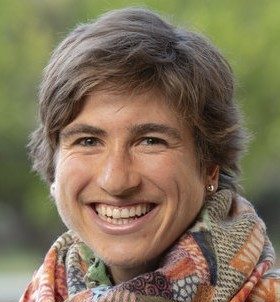
Dr. Eleanor Wiseman is an Assistant Professor at UW–Madison in the Agriculture and Applied Economics Department. She holds a PhD from U.C. Berkeley (2023) and was a postdoctoral researcher at Stanford University, affiliated with the King Center on Global Development and with the Center for Food Security and the Environment (2023-2025). Her research interests are in development economics, political economy and trade. Her primary research agenda focuses on agricultural markets, trade and food security. Most of my projects are located in East Africa but I also have projects in the DR Congo and India.
The event is free and open to the public.