Talk Description
What does it mean when young people take to the streets to say, “We no go gree”—we will not accept this? In recent years, Nigerian youth have mobilized through protests, chants, digital platforms, dance, visual culture, and other forms of collective expression to confront economic hardship, political exclusion, and uncertain futures. While protest is often understood as a demand directed at the state, this talk asks what else happens when people gather to resist conditions of precarity.
Drawing on fieldwork and visual analysis of recent Nigerian youth protests, this talk examines protest as both a political struggle and a practice of collective care. I argue that young people do not simply protest against what they reject; through their mobilization, they also create networks of recognition, solidarity, mutual support, and collective endurance. I place these practices in conversation with the Yoruba concept of Ìtọ́jú, a form of care concerned with attending to, nurturing, and sustaining life and relationships.
At the same time, I do not treat protest as inherently emancipatory. Protest can challenge existing hierarchies while also producing new political ambitions and elites. Its politics is therefore ambivalent: it can make marginalized suffering visible and sustain collective life, even as it can become a site of contestation over power. By examining the chants, images, bodies, and networks through which Nigerian youth mobilize, this talk argues that protest is not only a demand for political change. It is also a struggle over who is recognized, whose lives are valued, and how collective life might be sustained when formal political institutions fail to care.
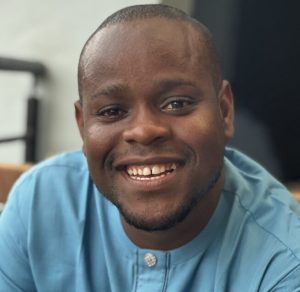 Speaker’s Bio: Kehinde Olukayode is a fourth-year doctoral student in Interdisciplinary Theatre Studies program at the Department of English, with a minor in Visual Culture Studies. His research explores African performance, Black theatre, youth politics, protest, and the ways people use theatre, dance, digital media, and other forms of cultural expression to respond to political and social challenges. His current work focuses on how Nigerian youth navigate precarity, organize collectively, and imagine new forms of political and social life.
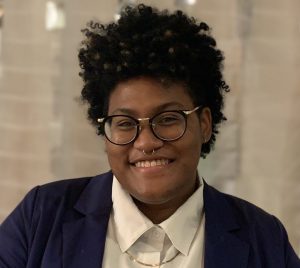 Community Panelist: Milcah Rimmer is a community organizer and youth worker committed to supporting Black youth across the diaspora. As Youth Justice Manager at Freedom, Inc., they work alongside Black and Southeast Asian youth and families through advocacy on domestic and sexual violence, leadership development, political education, and community organizing. Their work centers building the power of Black, queer, trans, and gender-expansive communities to end personal and state violence and build a future where all people can be safe, supported, and free.
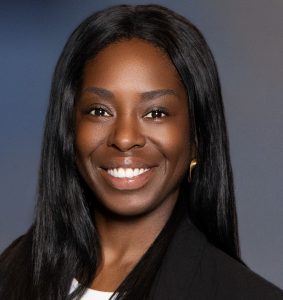 Moderator: Erica Ayisi is an international freelance journalist focusing on human feature stories around the world. Her work appears in NBCNEWS.com, Mongabay, Rhode Island PBS Weekly, The Root, ESSENCE, Lonely Planet, Afroelle Magazine, xoNecole, and other publications.
This event is co-sponsored by the African Center for Community Development.
The event is free and open to the public.